Enhancing the Preparedness of Rice Production to Water Scarcity in the Lower Mekong Basin: A Transdisciplinary Approach
This project assesses current and future water scarcity in rice production in Cambodia and Vietnam, examining impacts on farming households and identifying policy options to improve water security and sustainable agriculture in the Lower Mekong Basin.
Enhancing the preparedness of rice production
Abstract
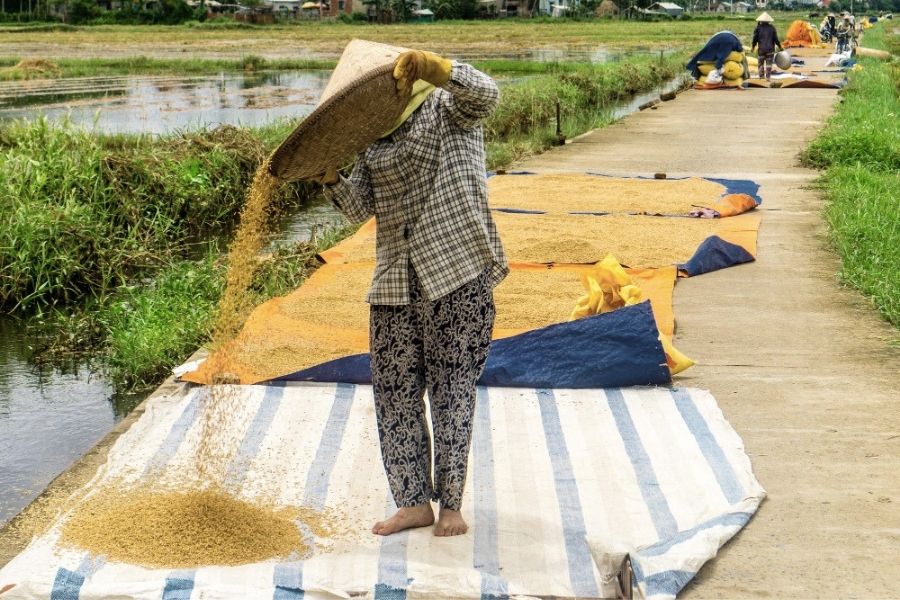
Rice production has had an enormous influence on food security, water use and human well-being, especially for the case of lower Mekong countries like Cambodia and Vietnam. Water is the single most important component for sustainable rice production, which is not only among the largest water users globally and locally, but also a major source of water pollution. Further, growing water insecurity has been observed in this region and is expected to increase frequency and severity in the near future due to expanding energy generation, population growth, higher food demand, and increasing climate uncertainty.
Currently, various laws and policies related to water resources are being developed to address the problem of water insecurity in Cambodia and Vietnam. Despite the progress, significant gaps remain between policy and practice. The issue of water insecurity in agricultural production, especially rice production in lower Mekong countries, including Vietnam and Cambodia, has been highlighted in academic studies, the media, and local, national, regional policy context. Therefore, a better understanding of water scarcity for rice production – the main economic activity of the rural poor in the region – and its impact on farming households is particularly important for the long-term goal of sustainable development.
The overall objective of the project is to enhance the preparedness of rice production to water insecurity by assessing the current and future levels of water use and scarcity for rice production, evaluate its impact and identify policy options that would help address water insecurity in the Lower Mekong river basin. The study contributes to the ongoing SUMERNET effort, feeding in particular into the emerging needs for better policy options in tackling water insecurity in the region.