How Local Movements Can Enhance Inclusive Decision-Making in Mekong Hydropower: Insights From the Pak Beng Dam in Laos
199_20210810_01
Dam-building continues unabated in the Mekong River’s mainstream and tributaries in Lao PDR. SUMERNET’s Mekong experts explore why the absence of effective local community movements in the country makes it difficult to push for inclusive hydropower decision-making
In Lao PDR, and in the Mekong region in general, developers have framed hydropower as a technical and managerial issue, positioned to generate revenue and promote economic growth through electricity production.
Dam rhetoric places rural populations as joint beneficiaries but experience to date shows the exact opposite. Dam-affected communities in Laos often suffer degraded livelihoods as they lose access to rivers and farmlands or communities become fragmented due to reservoir displacement.
Hydropower decision-making rests solely with government agencies and private sector actors, with local communities and local-level government (provincial, district and village levels) coming into the picture only during the project implementation stage.
Pak Beng dam consultation in Thailand: Local communities not informed
In its Transboundary Environmental Impact Assessment (TbEIA) for the Pak Beng Dam in Laos, the Kunming Engineering Corporation Limited (KHIDI) consulted only seven villages in Thailand. However, grassroots civil society groups like the Chiang Khong Conservation Group and the Thai Mekong People’s Networks have identified 33 villages from eight provinces as being affected by the dam.
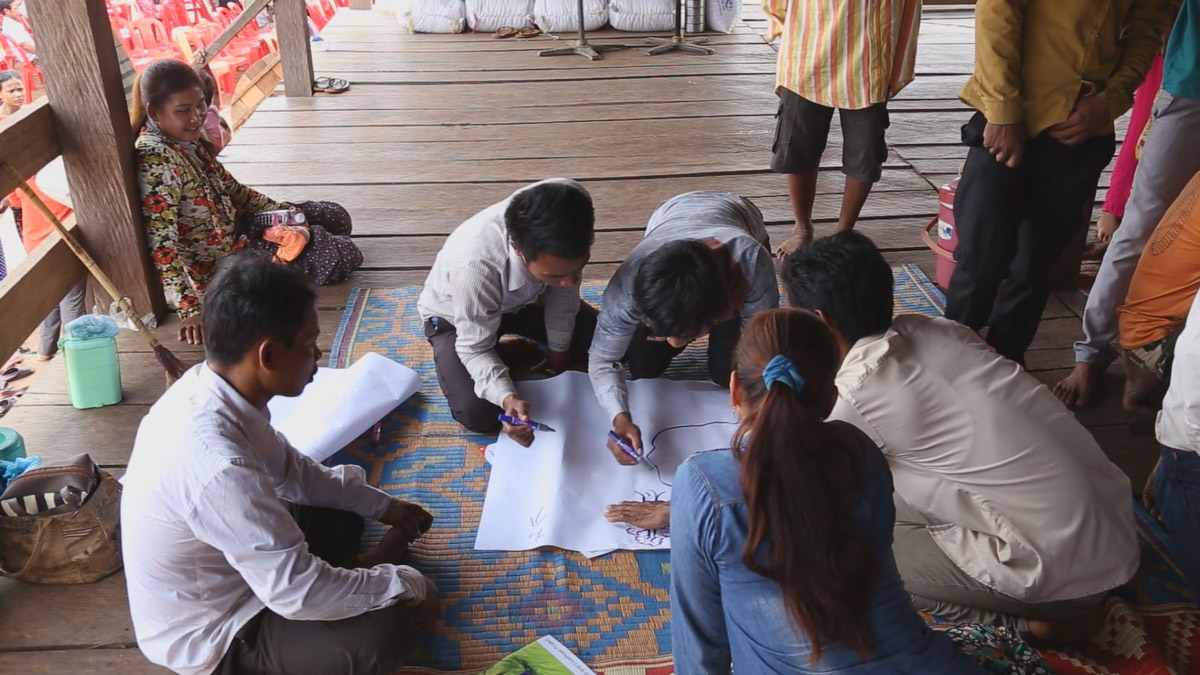
Thailand’s civil society has been working with local communities to ensure that KHIDI responded to local community concerns so that information dissemination and consultation processes are in line with the Mekong River Commission’s (MRC) Procedures for Notification Prior Consultation and Agreement.
But in practice, the company’s consultation meetings fell short of local communities’ expectations and there was no follow-up assessment to address many shortcomings in the TbEIA report such as the inadequate information regarding proposed measures to mitigate the impacts on fish migration, and social impacts for local communities living along the river.
Moreover, strategic alliances among CSO networks and international environmental groups have helped local communities build an understanding of the multi-scale complexities of hydropower decision-making, access information to identify entry points for negotiations and exert pressure on dam developers through different decision-making venues.
Link to the article: https://bkktribune.com/how-local-movements-can-enhance-inclusive-decision-making-in-mekong-hydropower-insights-from-the-pak-beng-dam-in-laos
Related Content

Perspective
/ November 13, 2019