How Does “Knowledge Co-Creation” Allow for Inclusion of Community Voices in Water Management?
Reflections based on the online webinar “Co-creating Knowledge to Enhance Women’s Leadership " project.
242_20220720_01
What is the knowledge co-creation approach? How can this allow for inclusion of community voices to address the key challenges in water insecurity? This piece reflects on findings and lessons learned from a SUMERNET project in co-creating knowledge for women’s leadership.
The Co-creating Knowledge to Enhance Women’s Leadership for Inclusive River Governance and Livelihood Resilience in the Mekong Region project (CKEWL) works to improve women’s leadership in river governance and enhance women’s livelihood resilience in the Mekong region, particularly in Myanmar (Inlay Lake) and Thailand (Isan).
Currently, the resources of the Mekong Region are being affected by many different development projects, with most of the burden of impacts falling on local people, particularly women who depend on the river resources and ecosystems.
However, there is a shared vision among the local communities of the Mekong Region that is critical to protect and nurture, especially relating to their local livelihood activities.
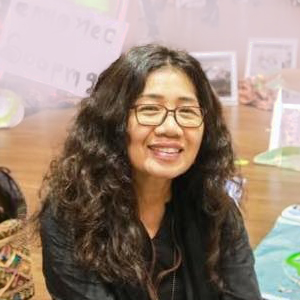
Dr. Kanokwan Manorom from Ubon Ratchathani University explained that the CKEWL project is co-developing a Mekong knowledge curriculum on local livelihood activities such as cotton, fishing and bamboo.
One example is the Tamui community-based school, where knowledge is shared about the relationship between local people and their river while encouraging inclusive development of resources.
The Mekong curriculum emphasizes gender because water management in cotton, fishing and bamboo curriculums is highly masculinized. The Mekong curriculum, based on a co-creation of knowledge together with cultural and social aspects, aims to help improve non-discrimination and gender-inclusive knowledge production processes in water resources.
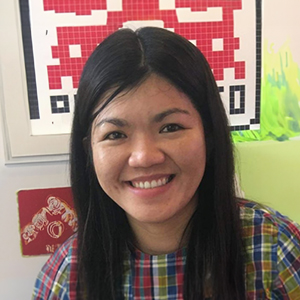
Highlighting experiences from Myanmar, Ms. Nang Shining from the Mong Pan Youth Association/Mae Nam Khone Institute showed how the approaches and recent activities with the local community of Inlay Lake were being led mostly by women.
She said that throughout the learning processes, power sharing and decentralization were emphasized while participants cooperated and shared their diverse knowledge of the Inlay Lake ecosystem.
The project has a flexible agenda and activities to enable local people to engage and help the team in its research project, which covers the eastern and western parts of Inlay Lake.
Ms. Shining concluded that the CKEWL’s co-creation research processes have been able to meet local people’s needs for knowledge sharing, along with enabling collaboration between CSOs, local researchers and community members.
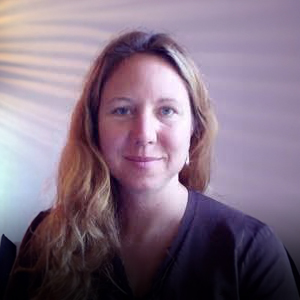
Ms. Karen Delfau from International Water Centre Alumni Network presented on multiple ways and scales of knowing and creating knowledge through global research.
In terms of knowledge globalization, there is an inequity when it comes to women whose ideas or thoughts seem invalid. The important question is how do we legitimize knowledge that doesn’t fit within the structures and paradigms of knowledge that exist?
Knowledge co-creation is defined as a process whereby multiple actors with individual and institutional priorities and various backgrounds engage to address systemic complex challenges, usually supported by a trusted facilitator. With this approach, we explore the relational aspects and the power dynamics to encourage more risk taking and let the communities take the lead, she explained.
Ms. Delfau also said that the impacts of Covid-19 have magnified the challenges of women and marginalized people who face growing inequities in their daily lives.
Livelihood resilience and spaces for inclusion
The knowledge co-creation processes can support stronger relations, livelihood resilience and spaces for inclusion.
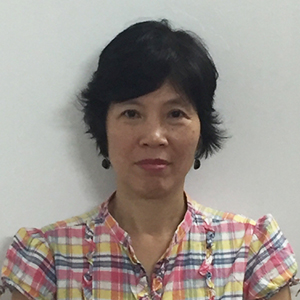
Dr. Le Thi Van Hue, SUMERNET Gender Advisor, suggested the Myanmar team could consider how knowledge of cooperation and co-production can bring policy changes to enhance women’s leadership and connect to livelihood resilience in the region.
Prof. Sudarat Tuntivivat, SUMERNET Conflict Sensitivity Advisor, said that this research project contributed in both theoretical and practical ways to understanding knowledge co-creation processes. The research method supported a comprehensive understanding of both cultural and scientific aspects of water governance and resilience, as the Mekong curriculums are directly beneficial to the local communities.
This piece is based on the online webinar “Sharing co-created knowledge from CKWEL project” on 24 June 2022, from 14:30 to 16:30 (Bangkok time). Around 37 participants joined the webinar, which shared the results from the Co-creating Knowledge to Enhance Women’s Leadership for Inclusive River Governance and Livelihood Resilience in the Mekong Region project (CKEWL). The project works to improve women’s leadership in river governance and enhance women’s livelihood resilience in the Mekong region, particularly in Myanmar (Inlay Lake) and Thailand (Isan).
The project team consists of women researchers from diverse institutions: International Water Centre Alumni Network (IWCAN), University of New South Wales (Canberra), Australia; Mekong Sub-region Social Research Center (MSSRC), Ubon Ratchathani University; and Mong Pan Youth Association (MPYA), Southern Shan State, Myanmar.