
From intern to impact: My journey as a Mekong fellow in climate finance
A personal reflection on building skills, confidence, and impact by an intern supported by the Mekong Think Tank Programme (MTT) Fellowship.
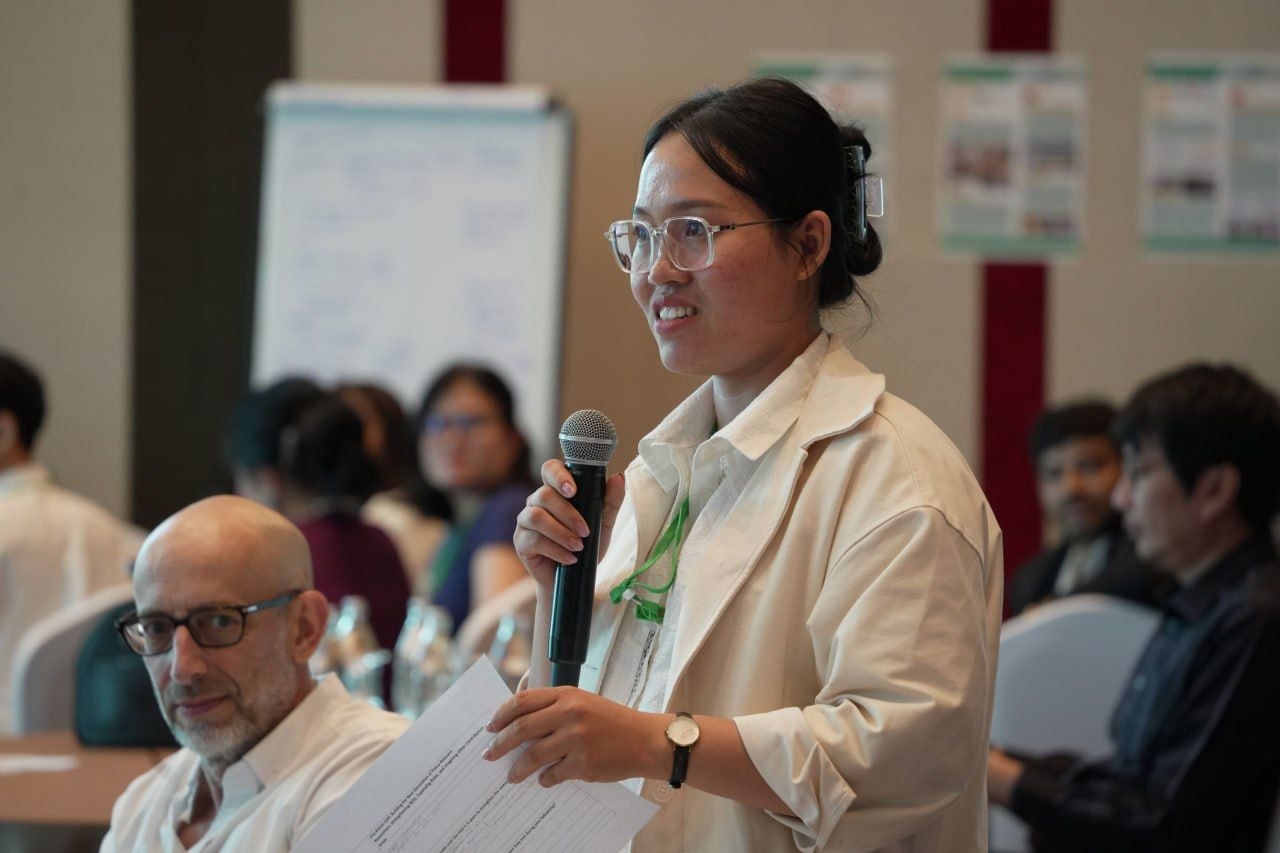
MTT Final workshop Group discussion (4)
Photo: SEI Asia
Introduction
Reflections from an MTT intern contributing to climate finance and learning systems
This blog reflects my journey supporting Monitoring, Reporting, Evaluation, and Learning (MREL) under the Inclusive Climate Finance for Vulnerable Communities in the Asia-Pacific (ICCAP) project. I am a fellow with the Mekong Think Tank (MTT) programme hosted by Stockholm Environment Institute (SEI) Asia Centre.
As an intern supporting MREL for the ICCAP project, I contributing to the development of systems and processes that support climate resilience and inclusive development in the Mekong region and beyond. This benefited my professional and personal growth.
The fellowship transformed my role from supporting tasks to actively contributing to monitoring, evaluation, and learning systems that inform climate finance decisions.
Supporting the early development of the monitoring, evaluation, and learning system
My fellowship journey began with taking part in the Mekong Environmental Resilience Week (MERW), a regional event that brings together almost 120 people comprising scientists, policymakers, media, nongovernmental orgamnizations, and local community representatives.
I supported the event organization and served as a note-taker for key sessions. These included discussions on the topics of nexus research, policy engagement, and stakeholder networks to build environmental resilience. This experience helped me better understand how knowledge is shared and translated into policy through collaboration between researchers, practitioners, and policymakers.
Strengthening contributions to MREL processes, system development, and stakeholder coordination
My primary responsibility as a fellow was to support the development of an MREL online system, a cloud-based platform designed for real-time tracking, secure data access, and gender-responsive monitoring, evaluation, and reporting.
Being involved at an early stage of system development gave me a unique opportunity to understand how such a system is built from the ground up. My initial tasks included entering datasets to test system functionality, supporting early development, and ensuring data compatibility across the platform.
I worked remotely from Cambodia (due to visa delays) while closely coordinating with my mentor and colleagues in Bangkok. This experience helped me strengthen my adaptability, communication skills, and ability to collaborate effectively in a virtual international team.
As I progressed, I became more involved in practical MREL tasks. I supported data entry for project activities, outputs, milestones, and indicators into the system’s workplan and results framework. I also contributed to the collection of user feedback to improve system usability and effectiveness.
In addition, I participated in key learning activities and workshops such as the ICCAP Year-End Workshop in Bangkok and the Chula-SEI Co-learning Session. In both events, I supported notetaking, collected participant feedback, and later prepared evaluation reports. These tasks strengthened my skills in data analysis, synthesis, and report writing.
From task-based support to proactive engagement in monitoring, evaluation, and learning systems
In the following months (February–April 2026), my role expanded as the MREL online system reached a critical development stage.
Most core data and tools were successfully integrated into the system, including inception reports, biannual reports, and risk registers. A dashboard was also developed to provide an integrated overview of project progress, risk management, and reporting functions. This is still in the testing phase and is expected to be launched soon.
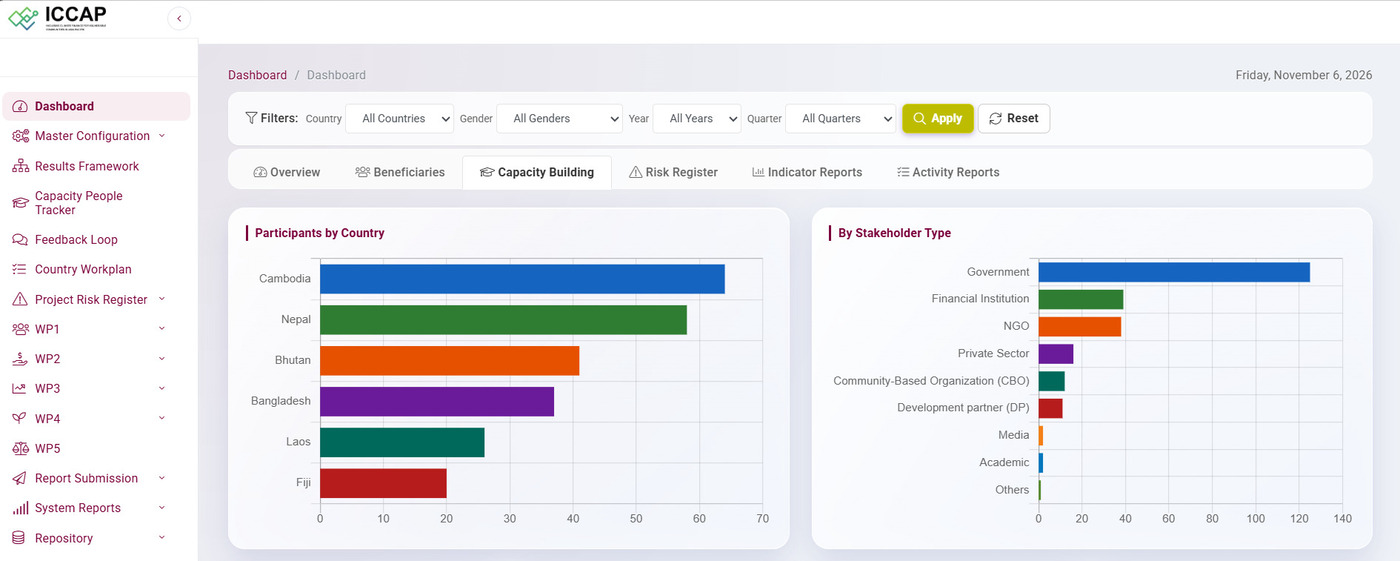
Image: MREL system dashboard, SEI Asia
Alongside system development, I finalized evaluation reports for YEW and CUSRI, which further strengthened my analytical and report-writing skills. I also regularly participated in staff meetings, which improved my understanding of team coordination and organizational processes.
I participated in an inception workshop in Cambodia focused on strengthening policymakers’ awareness and capacity to adopt inclusive green finance policies for vulnerable groups. In parallel, I worked closely with the system vendor, coordinating meetings, identifying technical issues, and communicating feedback to improve system functionality.
Beyond my core tasks, I also contributed to the preparation of the upcoming MTT Final MEL Workshop and Fellow Forum, where I am responsible for Speakers and Technical Preparation. In addition, I participated in the AFDC Global South Change Makers Workshop on Project Management and Monitoring, Evaluation, Accountability, and Learning (MEAL), which broadened my understanding of evaluation systems in global development contexts.
What are the changes
Looking back, the most significant change in my journey is the shift in how I see my role and contribution.
At the beginning of my fellowship, I focused primarily on completing assigned tasks and learning how systems function. Over time, I began to understand how monitoring and evaluation systems connect data, people, and decision-making processes. This shift allowed me to move from task execution to more analytical and proactive engagement, identifying gaps, proposing improvements, and contributing to discussions on system strengthening.
My confidence has also grown significantly. I am now more comfortable engaging with colleagues, mentors, vendors, and stakeholders, and I can actively contribute to meetings and collaborative processes. This fellowship has helped me strengthen both my technical MREL skills and my soft skills, including communication, teamwork, and critical thinking.
Looking ahead
The MTT Fellowship has been a transformative experience in my professional journey. It has provided me with the opportunity to grow from a learner into a more active contributor in climate finance and monitoring and evaluation work.
As I move forward, I aim to further strengthen my technical expertise and continue contributing to evidence-based decision-making processes. I also look forward to deeper collaboration with the SEI team, particularly through in-person engagement in Bangkok, which I believe will further enhance my learning and impact.
Most importantly, this fellowship has shaped how I view my role in development work not only as a technical contributor, but as someone who can help strengthen systems that support vulnerable communities and promote inclusive climate resilience in the Mekong region and beyond.
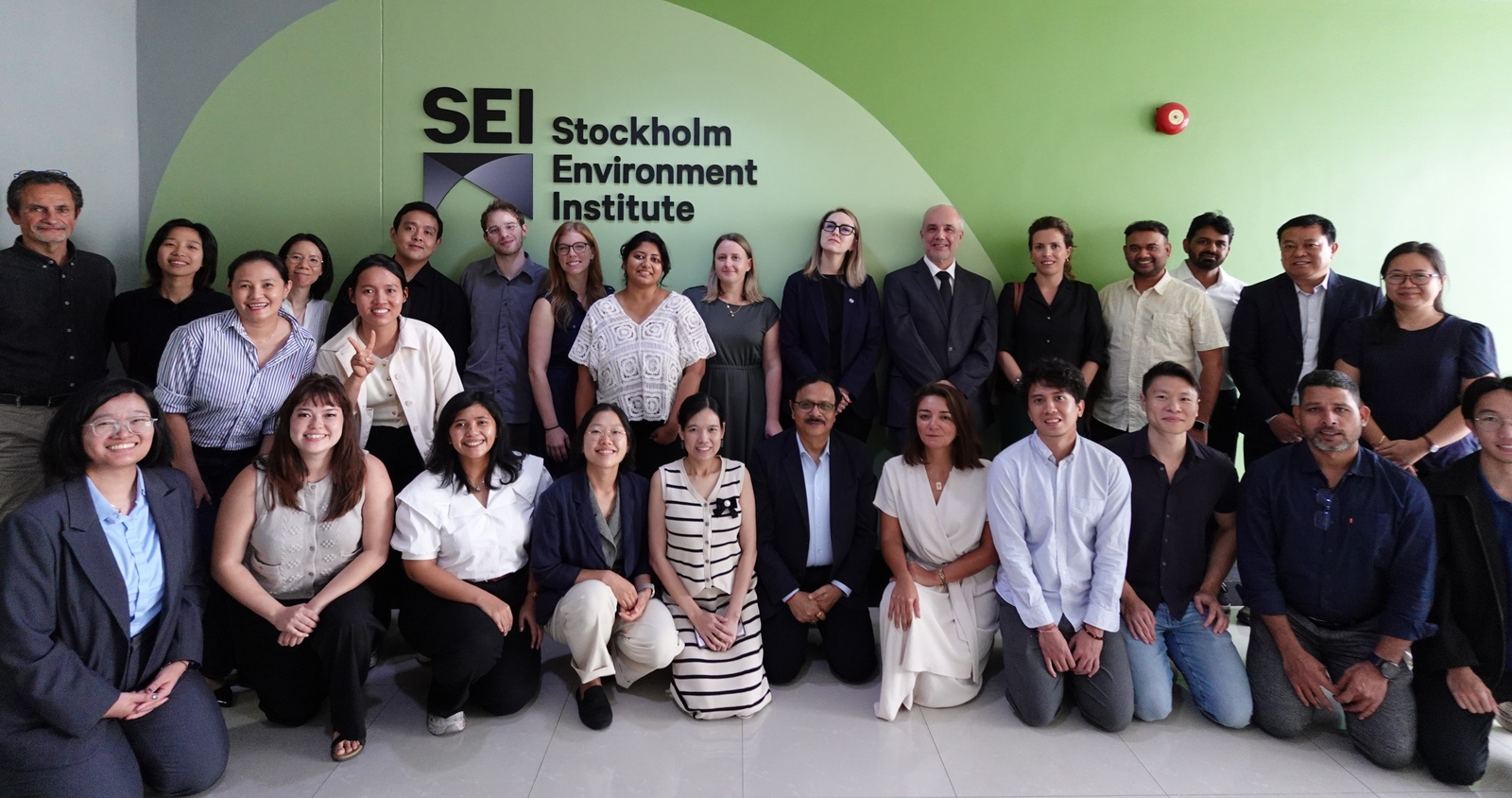
Photo: SEI Asia
Note: The Inclusive Climate Finance for Vulnerable Communities in the Asia-Pacific (ICCAP) project, funded by the International Climate Initiative (IKI), is being implemented from 2024 to 2029. It aims to strengthen economic, social, and environmental resilience in vulnerable communities across Asia and the Pacific (Bangladesh, Bhutan, Cambodia, Fiji, Lao PDR, and Nepal) by channeling climate adaptation finance to those most in need.

