Choosing the Right Channels and Tools Is Important for Effective Environmental Communications
Key takeaways from the SYP webinar “The role of young professionals in environmental communication: Experiences from the Mekong Region” show the importance of choosing the right communication tools and approaches.
268_20230810_01
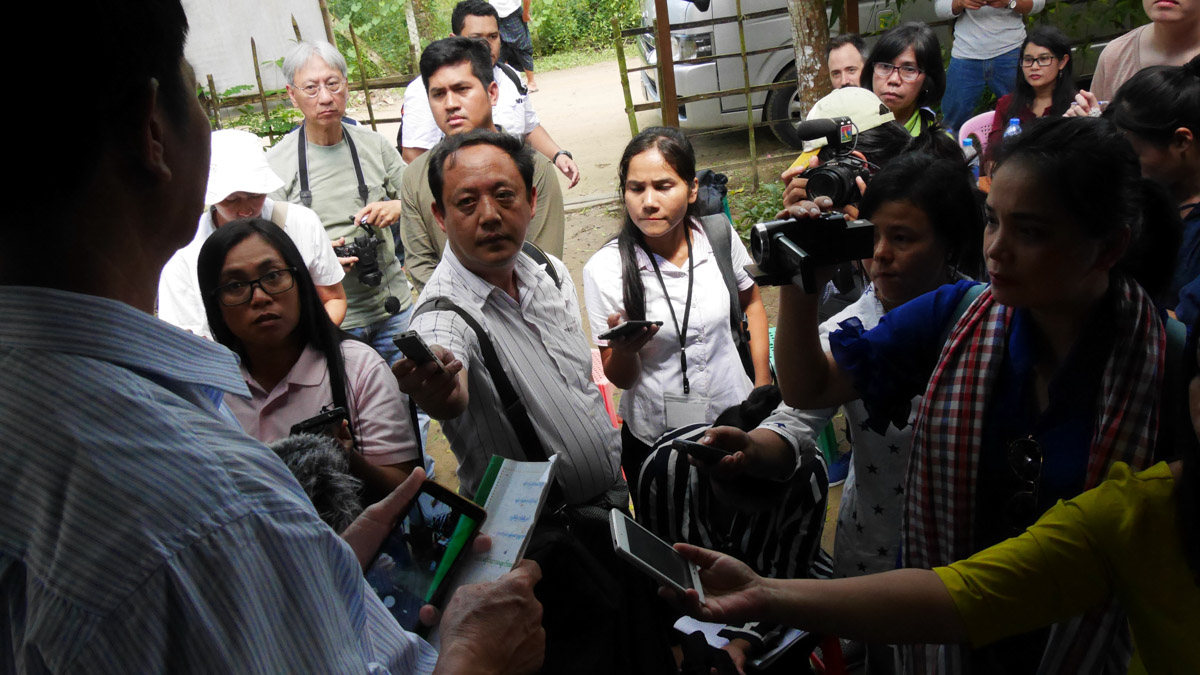
Journalists interviewing a farmer in Myanmar. Photo credit: Rajesh Daniel
Effective communication is crucial in addressing environmental issues and spreading awareness among researchers, policymakers and the general public. In today’s digital age, young professionals in the field of communication need to be aware of how to communicate and engage with different groups of people and share perspectives on environmental concerns. A recent webinar explored how communication can be more effective to address environmental challenges in the Mekong Region.
Some key takeaways below from the webinar panelists show the importance of choosing the right communication tools and approaches.
Ms. Variya Plungwatana – Communications assistant at SEI-Asia
The power of multimedia is powerful in outreach on the environment. We can attract more viewership and convey our research findings. For instance, short video campaigns featuring researchers can help people learn about their work and research. In addition, raising awareness can be further helped by using various social media platforms such as Twitter, Google, podcasts, and YouTube to engage with the public and share information about environmental issues in the Mekong Region.
Dr. Nguyen Dinh Dap – Researcher at the Institute of Human Geography at Vietnam Academy of social science
There is a distinction between communication and media. While communication focuses on the theories behind conveying messages effectively, media encompasses the methods and tools used for communication. It is crucial to ensure that messages are comprehensible to the intended audience and to cultivate creativity in communication efforts. In doing so, feedback and attention from the audience can inform future communication strategies, enabling wider reach and greater impact. Furthermore, it is essential to maintain honesty and avoid adopting an overly aggressive communication approach.
Mr. Kyaw Nyunt Linn – Water and climate researcher at Erasmus University Rotterdam
My experiences are based on investigative journalism which rests on fieldwork and establishing trust with the local communities. By interacting with vulnerable communities and consulting scientists and engineers working on environmental issues, we writers and media can amplify local voices authentically. Communication needs to reflect the expertise and perspectives of locals to foster deeper understanding and engagement.
Dr. Pham Hong Phuong – Lecturer at the University of Natural Resources and Environment
My case study on air pollution helps highlight the role of young people in tackling environmental challenges. By involving the youth and giving them a platform to raise their voices, we can benefit from their fresh perspectives and passion for preserving the environment. It is important to analyze the strengths and weaknesses of different communication approaches when addressing different subjects. This analysis will help choose the most effective tools to convey messages and drive positive change.
In today’s world, effective communication is critical in raising awareness and addressing environmental challenges. Through the power of multimedia, the involvement of young professionals in communication can be a powerful tool for disseminating knowledge, influencing decision-makers, and bringing about positive change. By continually assessing and adapting our communication strategies, we can ensure that environmental issues receive the attention they deserve and inspire action to protect our planet’s future.
Thanks to Souphavanh Sensouphanh, SYP country coordinator from Laos, for compiling the perspectives from the webinar.
——-
This piece is based on the presentations by panelists at the SYP webinar “The role of young professionals in environmental communication: Experiences from the Mekong Region”.



Related Content
Perspective
/ November 13, 2019