
Mekong Thought Leadership and Think Tanks Network (MTT)
The Mekong Thought Leadership and Think Tanks Network program aims to work with knowledge-based policy influence organizations in the Mekong Region. The 3-year program will develop clear and actionable evidence-based solutions to water, energy, and development challenges in the Mekong Region to bring about positive changes in policy and practice.
Mekong
Context and Overview
The Mekong Region has faced sustainability challenges related to water, energy, and changing climate. There are also inequities in the rapid development of the subregion, in which local communities have benefited little from this development. The poorest and most vulnerable bear the brunt of these changes due to their close connection to, and dependency on, natural resources. In addressing these inequities and ensuring that no one is left behind, there is a need for clear and actionable evidence-based development options along with tangible solutions that would support positive changes in policy and practice for sustainable futures for all.
The Mekong Thought Leadership and Think Tanks Network Program aims to work with national and regional knowledge-based policy influence organizations (KBPIOs), including think tanks, to enhance their effectiveness and inclusiveness in policy engagement. This will be combined with communications based on high-quality research, practical advice generated by the program, cross-learning among relevant organizations in the subregion, and drawing upon relevant Australian and other expertise and experiences in water security, energy security, and climate change mitigation and adaptation.
The Mekong Think Tanks program will achieve this through supporting and facilitating evidence-based research and analysis, engagement with regional and national KBPIOs, effective dialogue with decision-makers, and professional development for agents of change in the Mekong Region. The program will deliver high-quality, inclusive research and policy advice on governance, socio-economic values, benefits, and risks associated with water, energy, and the environment to achieve resilience to future climates at the regional and national levels. This research will also strive to address gender and social inclusion in all research projects while providing gender support and capacity development to all research teams. This is aimed at enhancing the inclusiveness of the research and policy advice created by the program.
This program will create opportunities for KBPIOs to engage with policy stakeholders by organizing regional and national policy forums. These forums will be the platforms for KBPIOs to deliberate high-level issues around governance, development, and equity in water resources, energy, and the environment within the context of climate change, utilizing the research supported by the Program.
What are KBPIO’s?
Knowledge-based policy influence organizations (KBPIOs) are entities and organizations that generate evidence-based knowledge, comment, analyze, or propose policies that aim to influence policy processes at various levels. We will expand our work on ‘KBPIOs’ to include a range of entities and organizations that generate evidence-based knowledge, comment, analyze, or propose policies that aim to influence policy processes.
The 3-year Mekong Thought Leadership and Think Tanks Network program aims to work with knowledge-based policy influence organizations in the Mekong Region. We will develop clear and actionable evidence-based solutions to water, energy, and development challenges in the Mekong Region to bring about positive changes in policy and practice. Please see this short video that illustrates what we aim to achieve and how we will get there.
Goals and Objectives
Long-term goal:
To contribute to improved and more equitable water and energy security, adaptation, and mitigation of climate change in the Mekong Subregion to benefit all, especially the marginalized, vulnerable, and at-risk communities.
End-of-program objective:
Water, energy, and climate research and policy interfaces are robust and more inclusive, resulting in more effective and equitable policies, which are cross-sectoral, informed by evidence, and respond to vulnerable groups’ needs.
By developing a regional network or alliance of KBPIOs, the program aims to:
- Strengthen the role and effectiveness of national and regional KBPIOs in engaging with national and regional policy processes on water and energy security and climate change mitigation and adaptation
- Strengthen the role and capabilities of national and regional KBPIOs in inclusive knowledge co-production processes by engaging with stakeholders across sectors, locations, and countries on water, climate, and energy issues and their interlinkages.
- Enhance the capacity for networking of national and regional KBPIOs and build the capacity of young professionals in delivering research and communicating and engaging with policy processes.
Key activities
- Scoping study of KBPIOs
- Key activities
- Design and establishment of the regional alliance or network of KBPIOs
- Mekong think tanks flagship studies
- Rapid response funds
- Fellowship grants
- Training and capacity-building activities
- Development of a young professional network
- Annual regional forum
Governance
The Program is governed through the Program Steering Committee, the Program Secretariat, and Program Advisors. These bodies contribute to ensuring effective, efficient, and accountable implementation of the Program.
Program Steering Committee
- Niall O’Connor, SEI Asia, Thailand (Chair)
- Louis Lebel, USER, Thailand (member)
- Darren Sinclair, UC, Australia (member)
- Wijarn Simachaya, TEI, Thailand (member)
- Ngin Chanrith, CDRI, Cambodia (member)
- Phoummixay Siharath, NOUL, Laos (member)
- Karen Delfau, IWCAN, Australia (member)
- Truong Dao Thanh, IPAM, Vietnam (member)
- Dwight Ronan, DFAT, Australia/Thailand (member)
Program Advisors
- Ngin Chanrith (CDRI), Component 1 Advisor
- Chu Thai Hoanh, Component 1 Advisor
- Andrew Noble, Component 1 Advisor
- Francis Johnson (SEI), Component 2 Advisor
- Pichamon Yeopanthong, Components 2 & 4 Advisor
- Wijarn Simachaya (TEI), Component 3 Advisor
- Klomjit Chandrapanya, Component 3 Advisor
- Karen Delfau (IWCAN), Component 5 Advisor
- Frederick Bouckaert (IWCAN), Component 5 Advisor
Program Secretariat
- Chayanis Krittasudthacheewa (SEI), Program Director & Component 1 Lead
- Agus Nugroho (SEI), Program Manager and Component 5 Lead
- Arkar Aung (SEI), Program Assistant
- Nhan Vo Tran Trung (SEI), MEL Specialist
- Sizwile Khoza (SEI), Gender expert
- Rajesh Daniel (SEI), Communications Specialist
- Variya Plungwatana (SEI), Communications Coordinator
- Bach Tan Sinh, Component 1 Co-lead
- Louis Lebel (USER), Component 2 Lead
- Thanapon Piman (SEI), Component 2 Co-lead
- Cynthia McDougall (SEI), Component 2 Co-lead
- Sushmita Mandal (SEI), Component 3 Lead
- Albert Salamanca (SEI), Component 3 Co-lead
- Leonie Pearson (UC), Component 4 Lead
- Phoummixay Siharath (NUOL), Component 4 Co-lead
- Boripat Lebel (USER), Coordinator for Component 1, 2 and 4
Program Components
Component 1
Development of home-grown regional network/alliance of knowledge-based policy influence organisations (KBPIOs)
1.1 Review existing networks/alliance and best practice of KBPIOs
1.2 Design and plan to establish/strengthen regional network/alliance of KBPIOs
1.3 Develop and recruit members of regional network/alliance
1.4 Organize meetings among the regional network/alliance members
1.5 Explore the options for continued support of the regional network/alliance beyond 2025
Component 2
Enhancing climate resilience of water and energy systems through policy research and collaboration among KBPIOs
2.1 Literature review to identify knowledge gaps
2.2 Policy review and consultation with stakeholders to understand policy needs and problems
2.3 Lead the scoping study of KBPIOs
2.4 Cross-cutting gender and social analysis of KBPIOs
2.5 Flagship studies for practical and robust solutions
2.6 Rapid response grants for practical solutions
2.7 Mentoring support
2.8 Dialogues to define/refine ‘critical WEC issues’ for transboundary investigation
2.9 Production of high-quality research outputs
Component 3
Inclusive engagement with policy, practice and the public beyond dialogues for effective changes
3.1 Literature review
3.2 Informal and formal engagement with regional and bilateral policy and planning
3.3 Contribute to the scoping study of KBPIOs
3.4 Mekong Annual Regional Forum
3.5 Synthesis of learnings from the Mekong Annual Regional Fora
3.6 Publications of policy recommendations and other outreach materials
3.7 Policy communication and media engagement to reach the wider public
Component 4
Professional development of agents of change
4.1 Literature review and engage with stakeholders to understand capacity needs
4.2 Contribute to the scoping study of KBPIOs (led by Component 2)
4.3 Design and implement training, events and other activities
4.4 Competitive fellowship grants to support 32 young professionals
4.5 Young professional networking/sharing from learning with SUMERNET Youth Network (SYN) and beyond
4.6 Synthesis of experience and lessons learned of young professionals and host institutes
Component 5
Effective project management monitoring, evaluation and learning (MEL) for long term sustainability
Activities
5.1 Program management and coordination with components 1–4
5.2 Recruitment of advisors and other resource persons
5.3 Sub-grant and contract administration and management
5.4 Key program meetings, trainings and events
5.5 Program MEL i.e. update and review of MEL framework, evaluations
5.6 Annual reporting and final completion report,
5.7 Program financial audits and sub-grant audits,
5.8 partnership and cooperation with other relevant initiatives,
5.9 fundraising and donor opportunity scanning activities
Program Consortium
The program partnership comprises 25 organizations, including eight consortium members, that not only help to ensure technical competency across the water, energy, and climate domain but also draw upon critical insights and connections.
Consortium Members
Stockholm Environment Institute – Asia Centre (SEI Asia), Thailand (Lead)
Unit for Social and Environmental Research (USER), Chiang Mai University, Thailand (Co-lead)
Centre for Change Governance, University of Canberra, Australia (Co-lead)
Cambodia Research and Development Institute (CDRI), Cambodia
Faculty of Engineering, National University of Laos (NUOL), Lao PDR
Thailand Environment Institute (TEI), Thailand
Institute of Policy and Management (IPAM), Vietnam
International Water Centre Alumni Network (IWCAN), Australia
The program also has 17 counterparts: UNSW, RUPP, ITC, IFReDI, NAFRI, NAFC, NERI, GMS Centre of MSU, MFU, SET of AIT, ERI, SPP of CMU, VNMC, Viet Insight, WASI, MRCS, WWF Regional Asia-Pacific Office from 4 Mekong countries and Australia to support the implementation of the program activities.
Granted Projects
Flagship studies
Flagship studies are one of the critical activities of the MTT Program aiming to enhance evidence-based understanding of the Water-Energy-Climate (WEC) nexus, including through the lens of gender and social equity. The work motivates the application of this knowledge to practical, robust, and equitable policy solutions to persistent and emerging issues and challenges.
For more details about each project, please download the document below:
Rapid response projects
Rapid response projects are one of the critical knowledge-generating activities of the MTT Program. These are more flexible than the flagship projects and aim to support focused interdisciplinary research that seeks practical solutions to urgent or emerging challenges in the water-energy-climate nexus.
For more details about each project, please download the document below:
Grants
Media-Research Collaboration Fellowship for Environmental Reporting
Mekong Thought Leadership and Think Tanks Network Program (MTT), hosted by SEI Asia, is providing six media-research collaboration fellowships (media fellowships) to selected journalists in the Mekong Region. Each fellowship is worth up to AUD 5,000 (~ USD 3,300) for activities to be undertaken from October 2024 to May 2025.
The media fellowship aims to produce and publish impactful stories highlighting critical environmental sustainability issues related to the MTT program’s research activities. The media fellowships aim to support MTT’s granted projects in the Mekong Region (four flagship studies and seven rapid response projects) to better communicate our science to the public for enhanced visibility and policy impacts.
Application deadline: 15 September 2024, 23:59 (Bangkok/Indochina time)
Midterm Evaluation proposals
The purpose of the MTE is to take stock of program progress and evaluate where the program stands against its set targets in terms of expected outcomes, outputs, and planned activities. The MTE serves as a guide for all parties concerned (DFAT, MTT Program Secretariat hosted in SEI Asia, MTT Program Steering Committee, and key partners) to help improve the implementation for the remaining period. The MTE shall include initial recommendations for enhancing the impact and sustainability of MTT Program outcomes, beyond its current period of implementation (2022-2025). Relevant stakeholders will consider these recommendations to conceptualise and design any follow-up investments and programs.
Funding: The total amount of the MTE will not exceed AUD 25,000.00 (~USD 16,300.00), including personnel costs, travel/site visit costs (if any), etc.
Application deadline: 15 May 2024, 23:59 (Bangkok/Indochina time)
Fellowships
The program views that investing in diverse entry- or mid-level professionals of all genders working in research and policy engagement is essential to enhance their capacity to produce and promote practical and sustainable solutions. The program will spearhead capacity building for entry- or mid-level professionals through fellowships and trainings.
The first round of fellowships, launched in April 2023, successfully awarded seven fellows. This call is seeking to recruit at least 13 high-quality fellows.
Timeline: Available to commit to a 12-month fellowship full-time or a maximum of 17 months part-time to end no later than June 2025.
Application deadline: 30 September 2023, 23:59 (Bangkok/Indochina time)
Flagship Studies and Rapid Response Grants
The Mekong Thought Leadership and Think Tanks Network Program (MTT) is opening calls for research-to-policy proposals that seek practical solutions to urgent or emerging challenges in the water-energy-climate nexus.
Calls open for two types of grants:
1. Flagship Research Studies
Funding: Total grants of AUD 1,000,000 (~USD 652,000) are available to award up to 4 research projects. Support will not exceed 250,000 AUD (~USD 163,000) per research project.
Timeline: Work to be completed within 1.5 years (18 months) from contract signing or agreed upon start date.
Application deadline: 1 October 2023, 23:59 (Bangkok/Indochina time)
Flagship studies are one of the key activities of the MTT Program that aim to enhance evidence-based understanding of the Water-Energy-Climate (WEC) nexus, including through the lens of gender and social equity. The work motivates the application of this knowledge to practical, robust, and equitable policy solutions to persistent and emerging issues and challenges.
2. Rapid Response Grants
Funding: Total grants of AUD 350,000 (~USD 230,000) are available to award up to seven research projects. Support will not exceed AUD 50,000 (~USD 33,000) per rapid response project project.
Timeline: Work to be completed be completed within one year (12 months) from contract signing or agreed upon start date.
Application deadline: 1 October 2023, 23:59 (Bangkok/Indochina time)
Rapid response grants are one of the key knowledge-generating activities of the MTT Program. These are more flexible grants than the flagship grants and aim to support focused interdisciplinary research projects that seek practical solutions to urgent or emerging challenges in the water-energy-climate nexus.
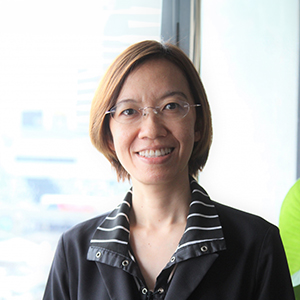
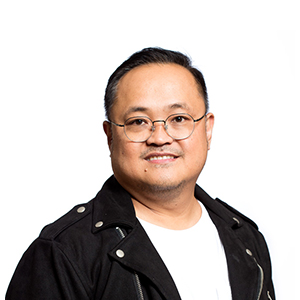
Project Team


Phone: +66 2 073 0040
Email: [email protected]
Address: 10th Floor, Kasem Uttayanin Building, 254 Chulalongkorn University, Henri Dunant Road, Pathumwan, Bangkok, 10330 Thailand
Related Publications
Related Media
Video
/ December 11, 2024

