COVID-19 and Household Water Insecurities in Vulnerable Communities in the Mekong Region
This peer-reviewed journal article examines how COVID-19 prevention measures affected household water insecurity across vulnerable communities in the Mekong Region. Drawing on survey data from Cambodia, Lao PDR, Myanmar, Thailand, and Viet Nam, the study explores the links between access to clean water, hygiene practices, and the broader social and environmental factors influencing water security.
Access to sufficient clean water is important for reducing the risks from COVID-19. It is unclear, however, what influence COVID-19 has had on water insecurities. The objective of this study was to assess the associations between COVID-19 control measures and household water insecurities. A survey of 1559 individuals living in vulnerable communities in five countries (Cambodia, Laos, Myanmar, Thailand, Vietnam) showed that increased needs for clean water to wash hands or facemasks made it more likely a person was water insecure along those dimensions.
Water insecurities with respect to handwashing and drinking, in turn, made adoption of the corresponding good practices less likely, whereas in the case of washing facemasks there was no association. Water system infrastructure, environmental conditions such as floods and droughts, as well as gender norms and knowledge, were also important for water insecurities and the adoption of good practices. As domestic water insecurities and COVID-19 control measures are associated with each other, efforts should therefore be directed at identifying and assisting the water insecure at high risk when COVID-19 reaches their communities.
———————
Louis Lebel, Hap Navy, Phoummixay Siharath, Chau Thi Minh Long, Nilar Aung, Phimphakan Lebel, Chu Thai Hoanh & Boripat Lebel, COVID-19 and household water insecurities in vulnerable communities in the Mekong Region. Environ Dev Sustain (2022). https://doi.org/10.1007/s10668-022-02182-0
Received 06 October 2021/ Accepted 01 February 2022/ Published 25 February 2022.
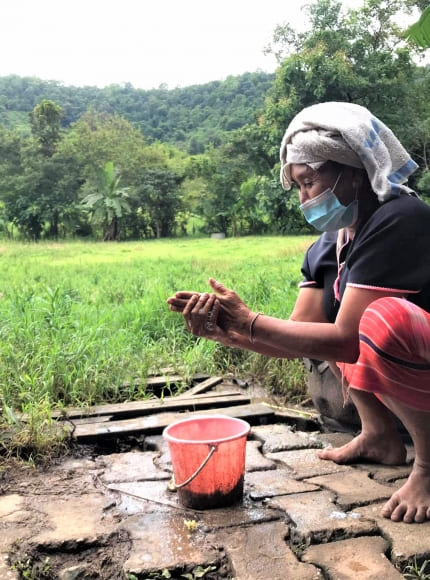
Access to sufficient clean water is important for reducing the risks from COVID-19. It is unclear, however, what influence COVID-19 has had on water insecurities. The objective of this study was to assess the associations between COVID-19 control measures and household water insecurities. A survey of 1559 individuals living in vulnerable communities in five countries (Cambodia, Laos, Myanmar, Thailand, Vietnam) showed that increased needs for clean water to wash hands or facemasks made it more likely a person was water insecure along those dimensions.
Water insecurities with respect to handwashing and drinking, in turn, made adoption of the corresponding good practices less likely, whereas in the case of washing facemasks there was no association. Water system infrastructure, environmental conditions such as floods and droughts, as well as gender norms and knowledge, were also important for water insecurities and the adoption of good practices. As domestic water insecurities and COVID-19 control measures are associated with each other, efforts should therefore be directed at identifying and assisting the water insecure at high risk when COVID-19 reaches their communities.
———————
Louis Lebel, Hap Navy, Phoummixay Siharath, Chau Thi Minh Long, Nilar Aung, Phimphakan Lebel, Chu Thai Hoanh & Boripat Lebel, COVID-19 and household water insecurities in vulnerable communities in the Mekong Region. Environ Dev Sustain (2022). https://doi.org/10.1007/s10668-022-02182-0
Received 06 October 2021/ Accepted 01 February 2022/ Published 25 February 2022.