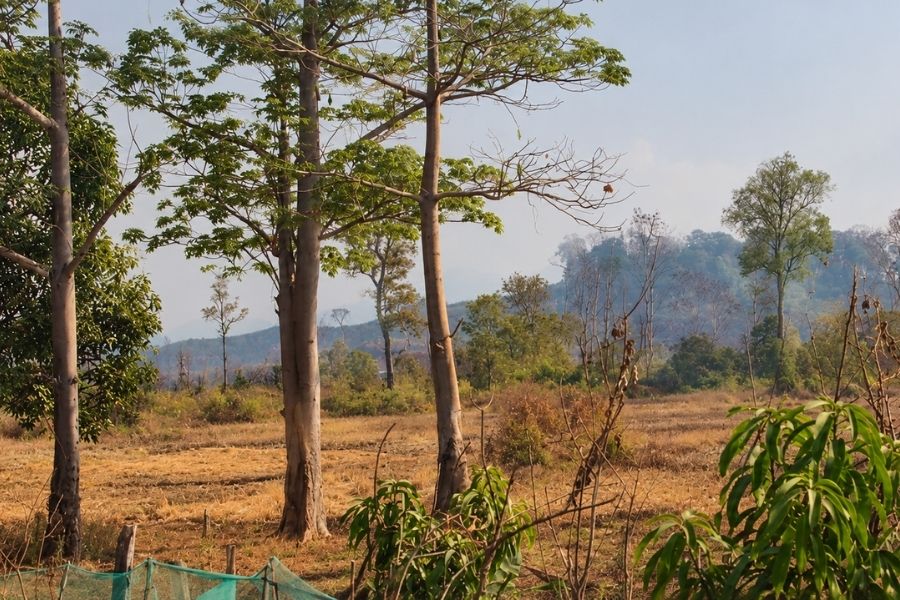
How Rubber Plantations Are Affecting Local Livelihoods in Myanmar: One Woman’s Story
As private rubber plantations expand under the supervision of armed groups in northeastern Myanmar, village people lose their lands and are forced to migrate elsewhere to work. One woman narrates her story of how the private sector’s expansion of rubber p
34_20160404_01
By GIAI Rubber Research Team (Kyoko Kusakabe et al.)
By GIAI Rubber Research Team (Kyoko Kusakabe et al.)
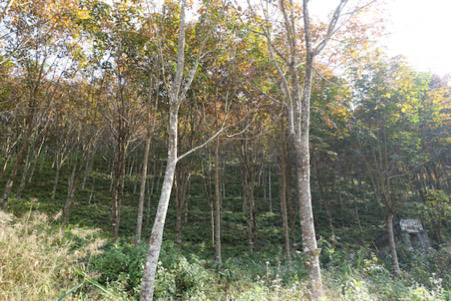
Rubber plantations are expanding in northeastern Myanmar’s Shan State. In Main Pa village, Lashio district, armed ethnic groups have taken about 1,000 acres of land in the village tract, a group of villages, and turned it into rubber plantations since 2005.
When their land was taken, villagers were too afraid to protest or stand up to the armed groups. Sometimes, they were even forced to volunteer their time and labour to clear land for rubber planting. After losing their land, local people had no land left to grow rice or other crops. Without arable land or jobs in the area, many villagers migrated for work, especially to Thailand.
Of the 42 households in the village, about 62 people have moved to find work in Thailand. In about five households, the entire family has migrated for work. More women than men migrate, and the village now depends largely on remittances from migrant workers.
Local Impacts of Rubber Concessions: One Woman’s Story
The wife of the head of the Main Pa village tract married into the village from a neighbouring village. She lives with her husband’s parents. The family used to cultivate her husband’s parents’ land until it was taken by an armed group. She said she felt saddened when the group took the land her family depended on for food and income.
She wanted to sue the company, which is owned by the armed ethnic group, but did not dare to do so. She said the village is now very quiet, with few people remaining, as many have lost their land and moved away.
After losing the land to the rubber plantation, she had to clear new land elsewhere. This was exhausting and time-consuming work. She took on most of the farming because her husband was busy with official duties as head of the village tract.
With their income reduced, she also had to cut household expenses. Food was one of the main expenses they reduced. However, she tried hard to protect spending on education so their children could continue attending school. Both she and her husband are educated and want their children to study. Their daughter is now in middle school in Lashio district town.
Getting Back Their Land
Since 2012, a new land law has helped villagers seeking to reclaim their land. The law states that vacant land can be taken up by the government. Villagers without land could apply to the government for access to it.
The company still had 300 acres where it had not planted rubber. In 2014, the woman learned about the land law from her husband and urged him every day to approach the company and claim the land back. Her husband eventually agreed. She said the village got its land back because of her efforts.
Armed with an official letter from the township, the village tract head and his secretary went to the company to negotiate. They secured the return of the 300 acres to the village. Since 2014, villagers have been able to farm this land.
Project update, March 2016: Gendered Impact of Cross-Border Agricultural Investment: Case of Rubber Plantations in Northern Laos, Myanmar, and Cambodia (GIAI-Rubber).