
Communicating Water-Related Climate Change Risks to Improve Local Adaptation in the Deltas of the Mekong Region
This project develops and tests communication models to improve understanding of water-related climate risks and strengthen local adaptation capacity in delta communities across Vietnam, Thailand and Cambodia.
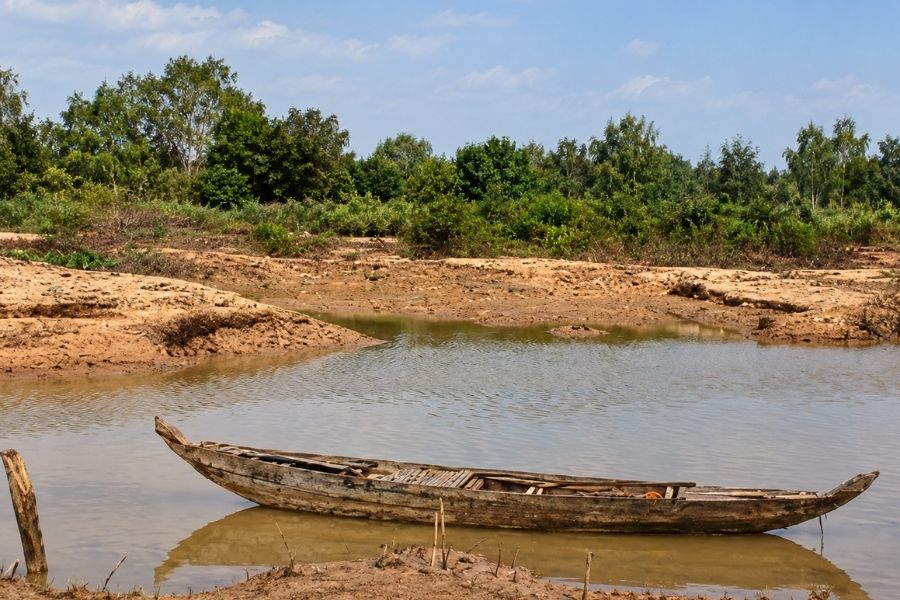
Communicating water-related climate change risks
The potential impacts of climate change on low-lying delta areas in the Mekong Region are high. Floods, droughts, storms, and threats to water supplies present significant risk management challenges. This research project aims to identify effective ways to improve and share understanding of water-related climate risks and uncertainties in selected delta communities in Vietnam, Thailand, and Cambodia. The study will convene multi-stakeholder working groups to develop communication models and test them in the three locations. The findings are expected to contribute directly to local government climate action and disaster risk management plans.
Partnering Institutions
Project Coordination
- AMDI: www.amdi.vn
Technical Lead
- National Institute for Science and Technology Policy and Strategy Studies (NISTPASS): www.nistpass.gov.vn
Countries Covered
Mekong Region: Vietnam, Thailand, and Cambodia.
Vision and Mission
The projected impacts of climate change on the densely settled, low-lying coastal and delta areas of Cambodia, Thailand, and Vietnam make the Mekong Region one of the most vulnerable areas to climate change in the world. Local residents are familiar with current climate risks and exposure, but may not recognize how these are likely to change or what the effects of climate change may be.
Climate change adaptation decisions will be made by local governments, households, community groups, and private enterprises. A shared understanding of changing hydrological risks, including floods, droughts, storms, and sea-level rise, is essential for collective and individual adaptation. It can also help vulnerable communities make informed decisions. Communication of climate change information and uncertainty to non-scientific audiences has so far been insufficient [20]. Better tools and processes for communicating climate risks and uncertainty, and sharing knowledge from different sources, are needed to support local adaptation decisions.
Local communities in flood- and disaster-prone areas often have substantial experience and knowledge of their vulnerabilities, risk reduction, and adaptation [1, 15]. However, residents and officials may have limited understanding of additional or changing risks associated with climate change [3, 11]. Climate experts understand climate-related risks but may lack knowledge of local risks, vulnerabilities, and response capacities [6, 10, 13]. Disaster risk management experts can develop early warning systems and emergency response strategies, but may also lack understanding of local contexts and longer-term climate challenges [9, 10].
Bringing together different forms of knowledge and experience is desirable but difficult in practice [8]. Differences in how stakeholders perceive and understand risks under uncertainty make communication and social learning crucial [2, 18]. Broad strategies for improving communication and fostering social learning are known, but need to be tailored to specific places and risks [7, 11, 12, 16].
Previous work in coastal and delta communities in Cambodia, Thailand, and Vietnam has highlighted the importance of risk perceptions to settlement patterns [5] and local knowledge in living with and adapting to flood regimes [14, 15, 17]. Floods cause losses but can also create livelihood opportunities [15, 17]. Climate change and human interventions in delta areas and upstream may have complex and potentially new impacts on flood characteristics and risks [4]. Integrating perspectives on flood management in Vietnam is partly a communication challenge, shaped by differences in perceptions of risk and uncertainty [6, 17].
This research builds on adaptation planning and intervention support developed by other projects in the three countries. In Vietnam, for example, it extends work supported by the Rockefeller Foundation in Can Tho, Da Nang, and Quy Nhon.
Although technical knowledge of climate risks and hydrological implications is growing, uncertainties remain high. Collaboration with local authorities and stakeholders is crucial to co-produce useful knowledge and support its application. It can also help build an informed and motivated group of stakeholders. Engaging policy actors and building local capacity can promote policy change. Developing communication methods provides an opportunity to engage policy actors and support evidence-based policymaking.
Gender and socio-economic status are expected to be important factors in understanding risk. To build this knowledge and support gender and social equity, the research team will:
- Proactively involve women and other potentially marginalized groups in the research process and analysis. The team will seek a reasonable balance of women and men in risk communication working groups, among key informants, and in other research activities.
- Examine gender-related differences in perceptions and understanding of risks and their causes, actual levels of risk and vulnerability, and the effectiveness of different ways of communicating risk information.
- Study how gender relations may affect access to resources that help reduce risks and vulnerabilities, as well as participation in communication activities.
- Present research findings to administrators and policymakers in a gender-sensitive way, where appropriate.
Boundary Partners
Vietnam
- An Giang University: www.agu.edu.vn
Cambodia
- Department of Environmental Science, Royal University of Phnom Penh (RUPP): RUPP Department of Environmental Science
Thailand
- International Maritime College, Kasetsart University: International Maritime College
- Department of Agricultural Development and Environmental Management, King Mongkut Lad Krabang Institute: King Mongkut Lad Krabang Institute
Project Objectives
Goal
To identify effective ways to improve and share understanding of water-related climate risks and uncertainties among local stakeholders as a basis for contributing to sustainable development in delta communities in the Mekong Region.
Purpose
To develop effective models for communicating water-related climate risks among national and local stakeholders in the Mekong Region.
Objectives
- Understand how different stakeholders, including officials, researchers, students, farmers, and fishermen, perceive the types, levels, and sources of water-related climate risks and uncertainties.
- Develop effective communication models on water-related climate risks with local stakeholder participation to promote shared learning and strengthen local adaptation capacity.
- Facilitate the sharing of good practices and experience in climate risk communication, and advocate for applying the communication models in delta communities across the Mekong Region.
Methodology
Conceptual Framework
Communicating climate change and disaster risks involves several challenges, including:
- Uncertainty about future climate conditions.
- Changes in land and water use.
- Dynamic population movements.
- Diverse and competing interests.
- Different perceptions of risk and climate change.
- Varying levels of understanding of water-related hazards in delta areas.
Communicating climate change information is difficult because it is complex and requires consideration of changing and uncertain future conditions. In these situations, social learning models of communication are needed to build trust and account for the different levels of learning required for effective responses.
Both experience and expert knowledge are likely to matter in managing changing and uncertain risks. Cognitive learning is needed to better understand changes and their consequences for the vulnerability of different social groups. Social learning is needed so stakeholders can respond across different time scales. Shared learning models should be inclusive, participatory, and deliberative.
Research Questions
- How do different stakeholders, including officials, teachers, students, and residents, perceive risks from water-related hazards in a changing climate?
- What tools and approaches are effective for communicating climate risks among stakeholders in Mekong delta areas?
- What institutional, social, and economic factors should be considered when improving climate risk communication?
Study Design
The study design creates multiple opportunities for social learning about how to communicate water-related climate risks and strengthen local adaptation capacity. Communication models need to be tailored to the risks and challenges specific to each location.
Baseline Survey of Perceptions and Knowledge on Climate Risks
Surveys will be conducted at three sites: An Giang province, Vietnam; Samut Songkram province, Thailand; and Prey Veng province, Cambodia. The surveys will assess different stakeholder groups’ perceptions and knowledge of water-related climate risks. Information will be collected through household surveys, in-depth interviews, and focus group discussions (FGDs).
Interviews will cover three time scales of action: (1) during emergencies, (2) preparedness for high-risk seasons, and (3) longer-term planning. The first two relate to disaster management, while the third focuses more on climate change adaptation. Informants will also be asked what they consider effective risk communication. Their suggestions will inform the communication model.
Each research team will conduct a desk study. Relevant documents may include annual disaster management plans, climate change adaptation strategies, local socio-economic and development plans, and reports on relevant projects in the study areas.
The quantitative survey will be conducted with two groups: students and residents, including farmers and fishermen, at the three study sites. This will provide information on community perceptions of climate risks. Baseline data will also allow researchers to evaluate the pilot communication models at the end of the study. Sample sizes will be based on statistical power and the desired precision of key variables or minimum detectable effect sizes, supporting further analysis of people’s perceptions of water-related climate risks.
Qualitative surveys will support quality control of the quantitative survey and provide additional information. Key informants, including residents, students, teachers, and officials, will be selected for in-depth interviews. Separate FGDs will be held with residents and student groups at each site. Data will be analysed using quantitative and qualitative software, such as SPSS, Excel, and Atlas.ti.
Development of the Communication Model
A Risk Communications Working Group (RCWG) will be formed and hosted by An Giang University. Members will include researchers from participating institutes and universities, representatives from government authorities and communities, and students. The RCWG will include people with experience working with target audiences, communication and media techniques, disaster risk management (DRM), and climate change adaptation (CCA).
The communication model will be developed with local communities and governments to ensure that it is relevant and applicable. Pre- and post-intervention controls will be established to help test its effectiveness. The design will consider:
- Preferred media, such as film, print, radio, or animation.
- Examples of key messages.
- Target audiences, including teachers and students, residents, and local government officials.
- Communication styles, such as social marketing, social learning, and education.
- Types of drivers, including individual, network, or community drivers.
- Information content, such as who is at risk, the scale of the risk, and what can be done to reduce it.
The final design will be developed in consultation with stakeholders at each site to ensure it fits the local context while remaining rigorous enough for testing and validation.
After development in An Giang province, Vietnam, the pilot communication model will be tested and validated through implementation in selected communities. Effectiveness will be assessed using methods such as pre- and post-intervention questionnaires or comparison with non-intervention households or communities.
The RCWGs will develop criteria and indicators to measure how effectively the models communicate risk and uncertainty. These may include comparative judgment scales using familiar risks, analysis of realistic problem situations, and questions about risk perception.
Where possible, the analysis and pilot design will consider differences within target audiences in their underlying perceptions and responses to risk. Studies have identified important predispositions that can apply across different hazards and risks [19]. The validation process is expected to consider people- and place-related factors that can influence behaviour at individual, network, and community levels [19].
Replication and Dissemination
Researchers in the three countries will jointly develop the communication model. It will first be piloted in An Giang province, Vietnam, then refined for use in Thailand and Cambodia. Two workshops will be organized to share findings and lessons between the three countries and across the region.
- The first workshop will be held at An Giang University to share the design and initial findings from the pilot communication models.
- After replication in Samut Songkram and Prey Veng provinces, another workshop will share findings and examples of knowledge products and processes with local partners and people from other universities. Representatives from the three study sites will serve as facilitators.
- Research findings will be presented at regional and international conferences, forums, and workshops, particularly those involving MRC, ADPC, SET, and CKDN.
Next Steps
Following the project evaluation, a follow-up project may be considered to apply the communication model in key areas of the Mekong Delta and integrate it into existing local DRM and communication plans.
Expected Outputs
- Study tools, including questionnaires, FGD guides, and methodology.
- Survey and desk analysis report.
- Stakeholder workshop.
- Risk Communications Working Group meetings.
- Training for RCWGs.
- Communication materials for the pilot.
- Communication model developed and tested.
- Documentation of the communication model development process.
- Hands-on training for government officials and research institute staff at the study sites.
- Workshop following the pilot in An Giang, with stakeholders from the three countries.
- Workshop to share findings after the communication models have been piloted in all three countries.
- Project findings presented at regional forums and workshops.
- Journal publications.
- Two workshops or meetings with key policy actors in each country.
- Policy papers on project findings delivered to key policy actors.
Planned Project Events
Key Events, Tentative Dates, and Venues
- 25 July: The Vietnam research team held a planning meeting at AMDI with nine researchers and assistants from AMDI and NISTPASS to officially launch the research, assign responsibilities, and plan the inception workshop.
- 21-23 August: Inception workshop with project teams from Vietnam, Cambodia, and Thailand in Hanoi, Vietnam. (Agenda attached.)
- Mid-September: Field survey in Vietnam, including interviews with local community members to assess their understanding of climate risks. Tentatively planned for the third week of September.
Concept notes or agendas for the events, if available.
References
- Berkes, F. (2007). Understanding uncertainty and reducing vulnerability: Lessons from resilience thinking. Natural Hazards 41: 283-295.
- Berkes, F. (2009). Evolution of co-management: Role of knowledge generation, bridging organizations and social learning. Journal of Environmental Management 90: 1692-1702.
- Birkmann, J., M. Garschagen, F. Kraas, and N. Quang (2010). Adaptive urban governance: New challenges for the second generation of urban adaptation strategies to climate change. Sustainability Science 5: 185-206.
- Cash, D.W., J.C. Borck, and A.G. Patt (2006). Countering the loading-dock approach to linking science and decision making. Science, Technology and Human Values 31(4): 465-494.
- CCFSC (2011). Statistics from the website of CCFSC for the period 1999-2008. Central Committee for Flood and Storm Control: Hanoi.
- Dang, N.M., M.S. Babel, and H.T. Luong (2010). Evaluation of flood risk parameters in the Day River flood diversion area, Red River Delta, Vietnam. Natural Hazards. DOI: 10.1007/s11069-010-9558-x.
- Few, R. (2003). Flooding, vulnerability and coping strategies: Local responses to a global threat. Progress in Development Studies 3(1): 43-58.
- GSO (2011). Statistics from the website of the General Statistics Office, period 1995-2006. General Statistics Office, Government of Vietnam: Hanoi.
- Hoa, L.T.V., N.H. Nhan, E. Wolanski, T.T. Cong, and H. Shigeko (2007). The combined impact on flooding in Vietnam’s Mekong River delta of local man-made structures, sea-level rise, and dams upstream in the river catchment. Estuarine, Coastal and Shelf Science 71: 110-116.
- Hung, H.V., R. Shaw, and M. Kobayashi (2007). Flood risk management for the RUA of Hanoi: Importance of community perception of catastrophic flood risk in disaster risk planning. Disaster Prevention and Management 16(2): 245-258.
- IDS (2007). Governance Screening for Urban Climate Change Resilience Building and Adaptation Strategies in Asia: Assessment of Da Nang, Vietnam. Institute for Development Studies, University of Sussex: Sussex.
- ISET (2010). The Shared Learning Dialogue: Building Stakeholder Capacity and Engagement for Resilience Action. In ISET Climate Resilience in Concept and Practice Working Paper 1, November. ISET.
- Lebel, L., T. Foran, P. Garden, and B.J. Manuta (2009). Adaptation to climate change and social justice: Challenges for flood and disaster management in Thailand. In Climate Change Adaptation in the Water Sector, F. Ludwig et al., editors. Earthscan: London. Pages 125-141.
- Lebel, L., T. Grothmann, and B. Siebenhüner (2010). The role of social learning in adaptiveness: Insights from water management. International Environmental Agreements 10: 333-353.
- Lebel, L., P. Lebel, and R. Daniel (2010). Water insecurities and climate change adaptation in Thailand. In Climate Change Adaptation and Disaster Risk Reduction: An Asian Perspective, R. Shaw, J. Pulhin, and J. Pereira, editors. Emerald Publishers: Bingley, UK. Pages 349-372.
- Lebel, L., E. Nikitina, and B.T. Sinh, editors (2008). Climate Change and the Science and Practice of Managing Floods in Urbanizing Regions of Monsoon Asia. MAIRS Working Paper Series #4. Monsoon Asia Integrated Regional Study International Project Office and the Institute for Atmospheric Physics, Chinese Academy of Science: Beijing.
- Lebel, L., R.T. Perez, T. Sukhapunnaphan, B.V. Hien, N. Vinh, and P. Garden (2009). Reducing vulnerability of urban communities to flooding. In Critical States: Environmental Challenges to Development in Monsoon Asia, L. Lebel et al., editors. Strategic Information and Research Development Centre: Selangor, Malaysia. Pages 381-399.
- Lebel, L. and B. Sinh (2009). Risk reduction or redistribution? Flood management in the Mekong Region. Asian Journal of Environment and Disaster Management 1(1): 23-39.
- Maibach, E., C. Roser-Renouf, and A.A. Leiserowitz (2008). Communication and marketing as climate change-intervention assets: A public health perspective. American Journal of Preventive Medicine 35(5): 488-500.
- Opitz-Stapleton, S., G. Guilbert, K. MacClune, K. MacClune, L. Sabbag, and S. Tyler (2010). Only Death is Certain, Yet You Still Get Out of Bed in the Morning: Observations on the Use of Climate Information in Adaptation and Resilience Practice. In ISET Climate Resilience in Concept and Practice Working Paper 2, November. ISET.
Timeframe
30 June 2011 – 30 June 2011
Technical Leader:
Bach Tan Sinh, PhD,
Director of Department of S&T Human Resource Policy and Organization; National Institute for Science and Technology Policy and Strategy Studies (NISTPASS),
Ministry of Science and Technology; 38 Ngo Quyen Street, Hanoi, Vietnam;
Tel: + 84.4.39344102.
Mob. +84 913076261;
Email: [email protected]
Project Coordinator:
Mr Ngo Cong Chinh,
Director of Research Center for Disaster Risk Reduction and Climate Change,
Asian Management and Development Institute;
1st floor, VAS Building, My Dinh Urban Area #1, Tu Liem District, Hanoi, Vietnam;
Tel: +84.932233248,
Email: [email protected]

